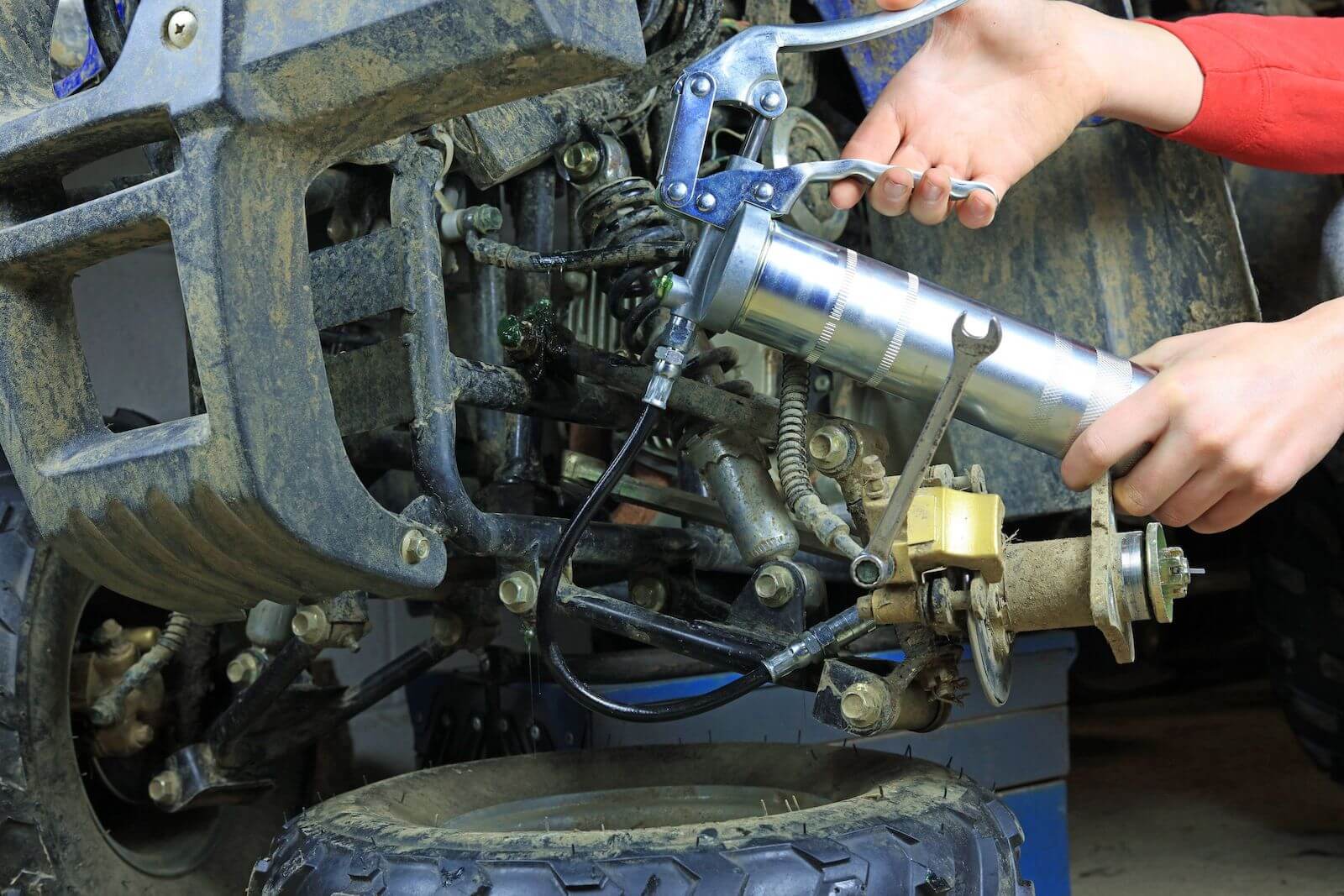
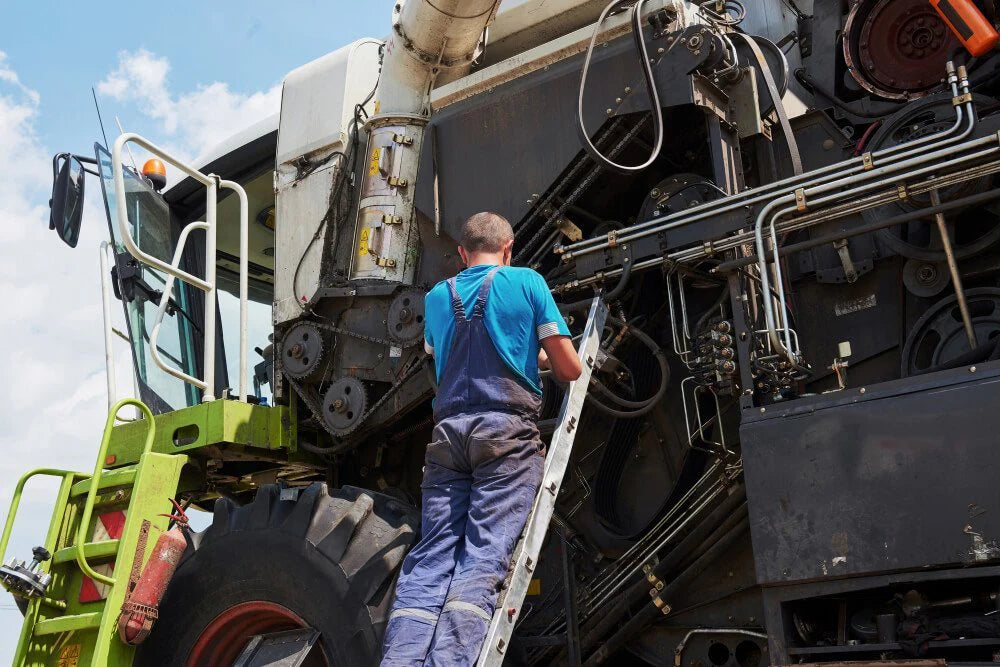
Hydraulic breakers are among the hardest-working attachments on any jobsite. Whether they are breaking reinforced concrete, fracturing granite in a quarry, removing asphalt, or processing slag in a steel mill, these machines operate under conditions that few other pieces of equipment ever experience. Every strike delivers tremendous force through a hardened steel tool, creating intense impact loads, sliding friction, vibration, dust, moisture, and heat.
For equipment owners, contractors, and fleet managers, the focus is often on selecting the right breaker, maintaining hydraulic flow, and replacing worn tools when necessary. Yet one of the most important factors affecting breaker life is often overlooked—the lubricant protecting the tool and bushings.
Unlike wheel bearings, pins, or chassis components, a hydraulic breaker creates a unique lubrication challenge. The working tool repeatedly slides inside the hammer while transmitting enormous impact forces. Conventional grease was never designed for this environment. Even premium multi-purpose greases can be squeezed out of the contact area or lose effectiveness under the extreme pressures generated during continuous breaking.
That is why hydraulic breaker manufacturers commonly specify chisel paste rather than ordinary grease.
Chisel paste is a specialized lubricant engineered specifically for hydraulic breakers and other percussion tools. It is formulated to stay where it is needed, carry extreme loads, reduce metal-to-metal contact, and continue protecting components under conditions that would quickly overwhelm many conventional lubricants.
Using the proper chisel paste can help extend tool life, reduce lower bushing wear, improve breaker reliability, and minimize costly downtime. Using the wrong lubricant—or failing to lubricate properly—can lead to premature wear, overheating, expensive repairs, and reduced productivity.
This guide explains what chisel paste is, how it works, why hydraulic breakers require specialized lubrication, and what equipment owners should consider when selecting the right product. Whether you operate a single breaker or manage an entire fleet, understanding the role of chisel paste is one of the simplest ways to improve equipment performance while reducing long-term operating costs.
What Is Chisel Paste?
Chisel paste is a high-performance lubricant specifically developed for the working tools used in hydraulic breakers, demolition hammers, rock breakers, and other percussion equipment. It is applied to the upper portion of the breaker tool—the section that moves inside the hammer's lower bushing—and forms a protective lubricating barrier between moving metal surfaces.
Although it is often grouped with industrial greases, chisel paste serves a much more demanding purpose.
The environment inside a hydraulic breaker is unlike almost any other lubrication application in construction equipment. During operation, the breaker tool is subjected to thousands of impact cycles while simultaneously sliding within hardened guide bushings. Every impact transfers tremendous force through the tool, while abrasive dust, crushed concrete, rock fragments, moisture, and vibration continually attack the lubricant.
A standard grease formulated for wheel bearings or chassis lubrication may perform exceptionally well in its intended application, yet struggle to provide adequate protection inside a hydraulic breaker. Chisel paste is engineered specifically to address these challenges.
While formulations vary between manufacturers, most premium chisel pastes are designed with several common objectives:
- Remain in the tool-to-bushing contact area during operation
- Resist being squeezed out under extremely high contact pressures
- Protect against metal-to-metal contact
- Reduce friction and wear
- Maintain performance over a wide temperature range
- Resist water washout and contamination
- Work reliably in manual and automatic lubrication systems
To accomplish this, chisel pastes typically combine carefully selected base oils with specialized thickener systems, extreme-pressure additives, tackifiers, corrosion inhibitors, oxidation inhibitors, and solid lubricants such as copper or graphite. Each component plays a role in protecting the breaker under severe operating conditions.
It is important to recognize that not all chisel pastes are formulated the same way. Some products prioritize maximum high-temperature performance for heavy demolition work, while others focus on cold-weather pumpability for automatic lubrication systems. The best product is one that balances these characteristics while matching the operating environment and equipment manufacturer's recommendations.
Ultimately, chisel paste should be viewed as a protective maintenance product rather than simply another consumable. Its purpose is not merely to lubricate—it is to help preserve some of the most expensive wear components inside the breaker.
Why Hydraulic Breakers Need Specialized Lubrication
To understand why chisel paste is so important, it helps to understand what is happening inside a hydraulic breaker every time the trigger is pulled.
When hydraulic pressure drives the piston's repeated impacts, enormous amounts of energy are transferred through the breaker tool into the material being broken. At the same time, the tool moves within the lower bushing as it absorbs these impacts and reacts to changing loads.

This combination of impact and movement creates one of the most demanding lubrication environments found in heavy equipment.
Repeated Impact Loading
Unlike many industrial machines that operate under relatively smooth loads, hydraulic breakers generate continuous shock loading. Each blow compresses the lubricant film between the tool and the bushing. The lubricant must recover almost instantly before the next impact occurs.
Ordinary grease may perform well under steady loads, but repeated impact can force it away from the contact area, leaving metal surfaces vulnerable to direct contact.
Chisel paste is specifically formulated to remain effective under these repeated shock loads, helping maintain protection throughout the operating cycle.
Sliding Contact
The breaker tool is not stationary.
During operation, it continually slides within the lower bushing. This sliding motion generates friction that can quickly accelerate wear if adequate lubrication is not maintained.
Unlike rolling bearings, which distribute loads through rolling elements, the tool and bushing rely heavily on the lubricant itself to reduce friction and separate the metal surfaces.
A lubricant with poor adhesion or insufficient film strength may be displaced, increasing wear rates and shortening component life.
Extreme Contact Pressure
The loads generated inside a hydraulic breaker are concentrated over relatively small contact areas. As a result, localized pressures can become extremely high.
Under these conditions, the lubricant film may become very thin. This is where the formulation of a quality chisel paste becomes critical. Specialized additive systems and solid lubricants help maintain a protective boundary layer even when conventional lubricating films are heavily compressed.
Heat Generation
Breaking concrete and rock generates heat through both impact and friction.
While the hammer body itself may remain at moderate temperatures, localized contact points between the tool and bushing can experience significantly higher temperatures during continuous operation.
Excessive heat can accelerate lubricant degradation, increase oxidation, and contribute to premature wear if the product is not designed for these conditions.
A properly formulated chisel paste helps maintain lubrication over a broad operating temperature range while resisting thermal breakdown.
Dust, Water, and Contamination
Hydraulic breakers rarely operate in clean environments.
Concrete dust, silica, rock particles, soil, mud, and water constantly challenge the lubricant. If contamination enters the contact area, it can accelerate wear by acting as an abrasive between moving surfaces.
For this reason, adhesion is one of the defining characteristics of a quality chisel paste. The lubricant must remain on the tool while resisting displacement from water, dust, and repeated impact.
Protecting Expensive Components
One of the biggest misconceptions about chisel paste is that it only protects the working tool.
In reality, the lubricant helps protect the entire wear system surrounding the tool, including lower bushings, retainers, guide components, and other critical interfaces. By reducing friction and minimizing wear, proper lubrication helps maintain correct clearances, improves operating efficiency, and reduces the likelihood of premature component replacement.
Considering the cost of replacement bushings, breaker rebuilds, machine downtime, and lost production, the lubricant itself represents only a small fraction of the total operating cost.
For that reason, experienced contractors often view chisel paste not as an expense, but as inexpensive insurance for a much larger investment.
Looking Ahead
Understanding what chisel paste is—and why hydraulic breakers require specialized lubrication—is the foundation for selecting the right product.
In the next section of this guide, we'll examine how chisel paste actually works, including the role of base oils, tackifiers, extreme-pressure additives, solid lubricants, and the engineering principles that allow premium formulations to protect hydraulic breakers under some of the harshest operating conditions found in the construction industry.
Base Oils: The Foundation of Protection
Every grease or chisel paste begins with a base oil. This oil performs the primary lubrication by creating a fluid film that separates moving metal surfaces and reduces friction.

Hydraulic breakers present a particularly difficult challenge because the lubricant film is repeatedly compressed by thousands of impact cycles every hour. If the fluid film becomes too thin or is displaced from the contact area, metal-to-metal contact can occur, rapidly increasing friction, heat, scoring, and component wear.
Historically, chisel paste formulations relied heavily on extremely high-viscosity base oils to maintain film thickness under severe impact and pressure. These heavy oils provided strong load-carrying performance and helped resist squeeze-out, but they also created limitations. As temperatures dropped, the lubricant became increasingly difficult to pump through grease guns, delivery lines, and automatic lubrication systems.
Modern polymer technology allows formulators to achieve a more effective balance between protection and pumpability.
Instead of relying only on an extremely heavy base oil, advanced formulations can combine a lower-viscosity base oil with carefully selected polymers. These polymers improve the lubricant's film-forming characteristics, adhesion, and resistance to displacement. Under operating conditions, the polymer-enhanced lubricant can maintain a durable protective film comparable to—or better than—the film produced by older, heavier-oil technology.
This approach offers several potential advantages:
- Strong fluid-film protection under impact and pressure
- Improved adhesion to the tool and bushing
- Better resistance to squeeze-out
- Improved cold-temperature pumpability
- More reliable delivery through automatic lubrication systems
- Faster lubricant movement through hoses, fittings, and distribution blocks
- More consistent lubrication across a broad temperature range
The result is not simply a thinner chisel paste. It is a more advanced lubricant system in which the base oil and polymer package work together to produce the required film strength without depending exclusively on extremely high base-oil viscosity.
This distinction is particularly important in cold climates and on breakers equipped with automatic lubrication systems. A lubricant may provide excellent protection once it reaches the tool, but that protection has little value if the product cannot be pumped reliably to the lubrication point.
The choice of base oil and polymer system therefore influences:
- Lubrication film thickness
- Load-carrying capability
- High-temperature stability
- Cold-weather pumpability
- Adhesion and retention
- Oxidation resistance
- Overall service life
A properly engineered formulation balances these properties so the lubricant can be delivered efficiently and still maintain a strong protective film under severe operating conditions.
Tackifiers: Keeping the Lubricant Where It Belongs
One of the defining characteristics of quality chisel paste is its exceptional adhesion.
During operation, the breaker tool is constantly moving while being subjected to severe impact and vibration. Ordinary grease can gradually migrate away from the contact surfaces or be squeezed out entirely.
Tackifiers are specialized adhesive polymers added to the formulation that dramatically improve the lubricant's ability to cling to metal surfaces.
Instead of being displaced after only a few impacts, a properly formulated chisel paste continues coating the tool and lower bushing, maintaining a protective barrier where it is needed most.
The benefits include:
- Improved adhesion to steel surfaces
- Reduced squeeze-out under heavy loads
- Better resistance to vibration
- Longer lubrication intervals
- Improved water washout resistance
A simple way to visualize tackifiers is to imagine the difference between water and honey. Both are liquids, but honey naturally clings to surfaces much longer. Tackifiers give chisel paste similar "stay-in-place" characteristics while still allowing it to lubricate effectively.
Extreme-Pressure Additives: Protection When Oil Alone Isn't Enough

Under ideal conditions, a lubricant completely separates two metal surfaces with a continuous oil film.
Inside a hydraulic breaker, those ideal conditions rarely exist.
Impact loading creates extremely high localized contact pressures that can compress the lubricant film until it becomes only a few molecules thick. Under these conditions, conventional lubricants may no longer provide adequate separation.
This is where extreme-pressure (EP) additives become critical.
EP additives react under high pressure and elevated temperatures to form microscopic protective layers on the metal surfaces. Rather than allowing steel components to weld together or score during momentary metal contact, these chemical films absorb much of the load and reduce wear.
This process is known as boundary lubrication, and it is one of the primary reasons specialized chisel paste dramatically outperforms general-purpose grease in hydraulic breaker applications.
Without an effective EP additive package, component wear accelerates quickly under repeated impact loading.
Solid Lubricants: A Second Layer of Defense
Many premium chisel pastes also contain solid lubricants such as graphite, copper, or other engineered solid particles.
Unlike liquid lubricants, solid lubricants remain effective even when the oil film becomes extremely thin.
These particles fill microscopic surface irregularities and continue providing protection during severe boundary lubrication conditions.

Graphite, for example, has a naturally layered crystal structure that allows it to shear easily, reducing friction even under tremendous loads.
Copper particles provide excellent load-carrying capability while helping dissipate localized heat generated during continuous operation.
The exact formulation varies among manufacturers, but solid lubricants provide several important advantages:
- Additional protection during extreme loading
- Reduced metal-to-metal contact
- Lower friction
- Improved seizure resistance
- Enhanced high-temperature performance
It is important to note that the presence of copper does not automatically indicate a superior product. Performance depends on the complete formulation, particle size, additive balance, and compatibility with the overall lubricant system.
Working Together as a Complete Lubrication System
One of the biggest misconceptions about chisel paste is that a single ingredient is responsible for its performance. In reality, every component works together.
- The base oil provides primary lubrication.
- The thickener holds the oil in place.
- Tackifiers improve adhesion.
- Extreme-pressure additives protect against heavy loading.
- Solid lubricants provide a secondary layer of defense during boundary lubrication.
- Corrosion inhibitors protect against moisture.
- Oxidation inhibitors extend lubricant life.
The result is a lubricant capable of performing in one of the harshest mechanical environments found in construction equipment.
Removing or reducing any one of these components may lower manufacturing cost, but it can also significantly reduce performance in demanding application.
Engineering for Extreme Operating Conditions
Hydraulic breakers expose lubricants to conditions rarely encountered elsewhere in heavy equipment.
A premium chisel paste must continue protecting components through:
- Continuous impact loading
- Extremely high contact pressures
- Sliding tool movement
- High localized temperatures
- Dust and abrasive contamination
- Water exposure
- Constant vibration
- Long operating cycles
No single additive can solve all of these challenges.
Instead, premium formulations balance viscosity, adhesion, load-carrying capability, temperature stability, and contamination resistance to provide consistent protection throughout the service interval.
This balanced approach is what separates purpose-built chisel paste from conventional multi-purpose grease.
Not All Chisel Pastes Are Created Equal
Although many products are sold as "breaker grease" or "chisel paste," formulations can vary significantly.
Differences in base oil viscosity, additive technology, solid lubricant content, pumpability, and manufacturing quality can all influence real-world performance.
When evaluating a chisel paste, contractors and equipment owners should consider more than price alone. Factors such as adhesion, load-carrying capability, operating temperature range, compatibility with automatic lubrication systems, water resistance, and long-term wear protection all contribute to the total cost of ownership.
A lubricant that costs only a few dollars more per cartridge may help extend bushing life, reduce tool wear, minimize downtime, and prevent repairs that can cost thousands of dollars.
Ultimately, the value of chisel paste should be measured not by its purchase price, but by how effectively it protects one of the most expensive attachments on the jobsite.
Up Next
Now that we've explored the science behind chisel paste, the next section answers one of the most common questions asked by contractors and equipment owners:
Can you use moly grease instead of chisel paste?
We'll compare the two lubricants side by side, explain where they differ, and discuss why a product that performs exceptionally well in many industrial applications may not be the best choice for protecting a hydraulic breaker.

Protecting a breaker?
AET Systems supplies AirTec Lube-Shuttle® Chisel Paste Grease in the threaded Lube-Shuttle® cartridge system. Always confirm the lubricant specification in your breaker manufacturer’s manual before selecting a product.