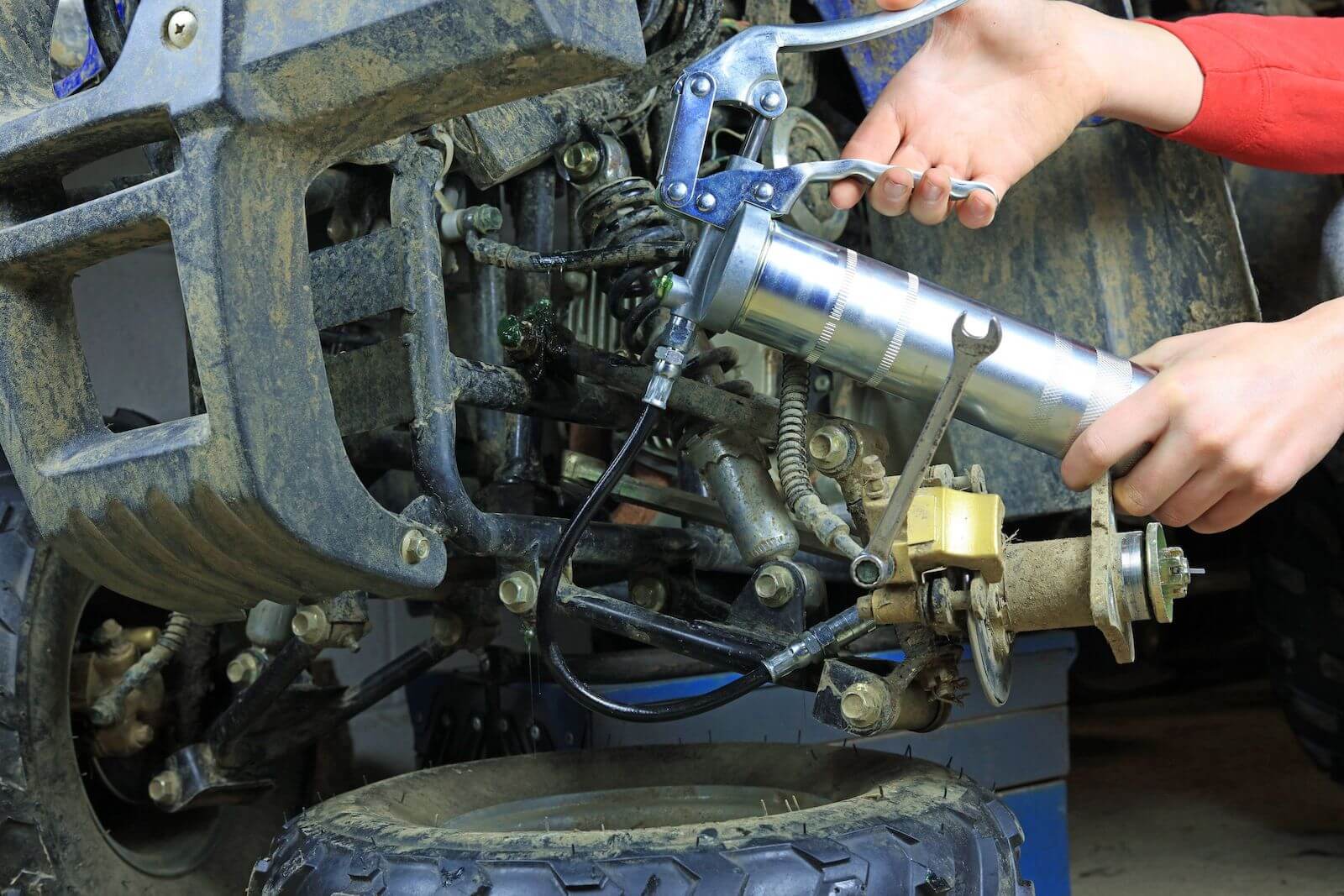
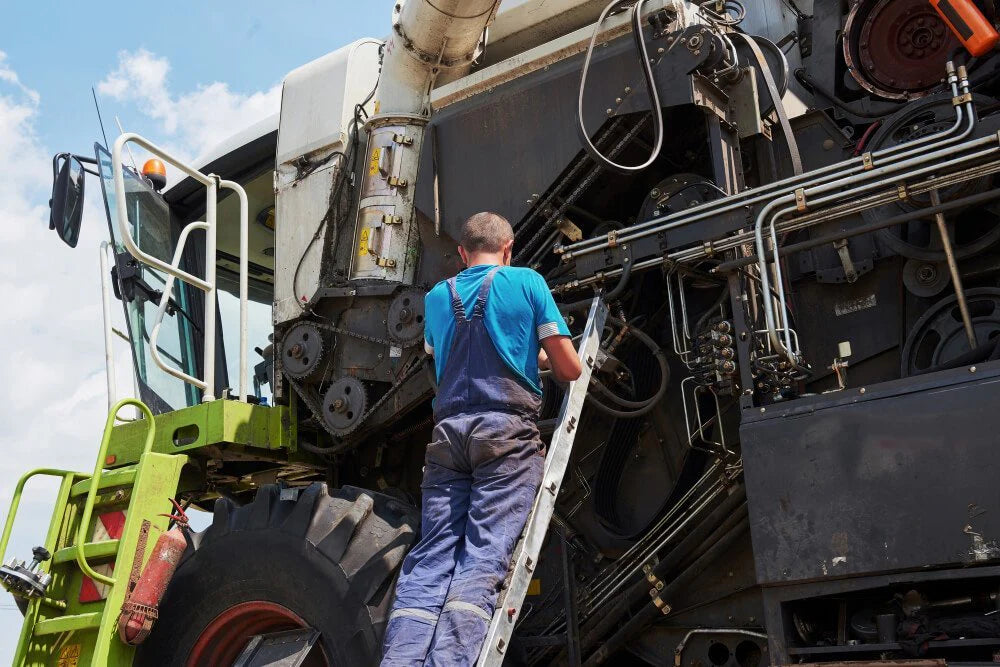
Most shops track the cost of grease. Far fewer track the cost of the time it takes to apply it, and that time is usually the bigger number.
AET Systems' own estimate, based on figures from Wagner's Grease Solutions Catalog, puts it plainly: at a $12.50 per hour labor rate, greasing a single point that takes 15 minutes costs about $12.50 in labor against roughly $3.13 in grease. Labor alone works out to around 80 percent of the total cost of that job. Stretch the same task to 30 minutes, which happens often enough on equipment with hard to reach fittings or a slow fitting coupler, and labor cost doubles to $25.00. Grease is rarely the expensive part of greasing. Time is.
That is worth sitting with for a minute, because it changes where it makes sense to look for savings. A cheaper grease saves a few dollars. A faster, cleaner greasing process saves labor minutes across every point on every piece of equipment, every time it gets serviced, for as long as you own it.
Where the minutes actually go
Two things slow a greasing job down more than anything else: reloading the gun, and fighting a coupler that will not hold the fitting.
A traditional grease gun that is loaded by hand, packing loose grease into the barrel, means stopping the job, finding a clean surface, and working grease in without trapping air pockets that cause the gun to lose pressure mid job. Even standard prefilled tubes require air bleeding, and a mess tube exchange.
AET's Lube-Shuttle system replaces that step with a sealed, pre filled cartridge that threads directly into the gun. Reloading becomes swapping a cartridge rather than packing grease by hand, and because the cartridge is sealed, the grease inside is not exposed to air and contamination between uses the way an open tub can be. And it’s a clean exchange, no mess, no wasted grease.
The other time sink is the coupler, the part that actually locks onto the fitting. A loose fitting coupler slips off a worn or undersized zerk fitting under pressure, which sprays grease back at the operator and the equipment instead of into the joint. That is not just a mess, it is a redo: the operator has to stop, clean up, reposition, and try again. AET's safeLOCK coupler uses a hardened 4 jaw design with a locking mechanism that holds it onto the fitting while you pump, rated to 600 bar (over 8,000 psi), so it stays attached instead of popping off mid stroke.
What this means for your maintenance budget
If 80 percent of a greasing job's cost is labor, the highest leverage place to cut cost is not a cheaper grease, it is fewer stopped jobs, fewer reloads, and fewer do overs from a coupler that will not hold. That is true whether you are running a single pistol grip gun on a hobby farm or a fleet of lever handle guns across a maintenance shop.
AET's Lube-Shuttle grease guns (pistol grip, lever handle, and 18V electric), the threaded cartridge system, and the safeLOCK coupler are built around that same problem: less time spent reloading and recovering from a bad connection, more time actually greasing the equipment. All three gun models and the coupler are available through store.advancedenginetech.com.
A quick way to think about it
-
Light, occasional greasing, general maintenance: the pistol grip grease gun.
-
Heavy duty agricultural, construction, fleet or industrial use: the lever handle grease gun, built for the extra mechanical pressure tight clearance fittings need.
-
Want to cut manual pumping out of the job entirely: the 18V electric grease gun.
-
Getting spray back or a coupler that will not hold: the safeLOCK coupler, on any of the three guns.